Category: Research Integrity
-
Signals brings its reference evaluation to Hum’s Alchemist Review
A new technology partnership puts the Signals Data Graph to work inside Alchemist Review’s broader manuscript assessment. Signals is a research intelligence platform built on the Signals Data Graph (SDG) – a network of more than 500 million evaluated publications that have been curated, cleaned, and cross-checked. Signals use the SDG to link reference lists…
-
A new trust signal: Cassyni talks in Signals
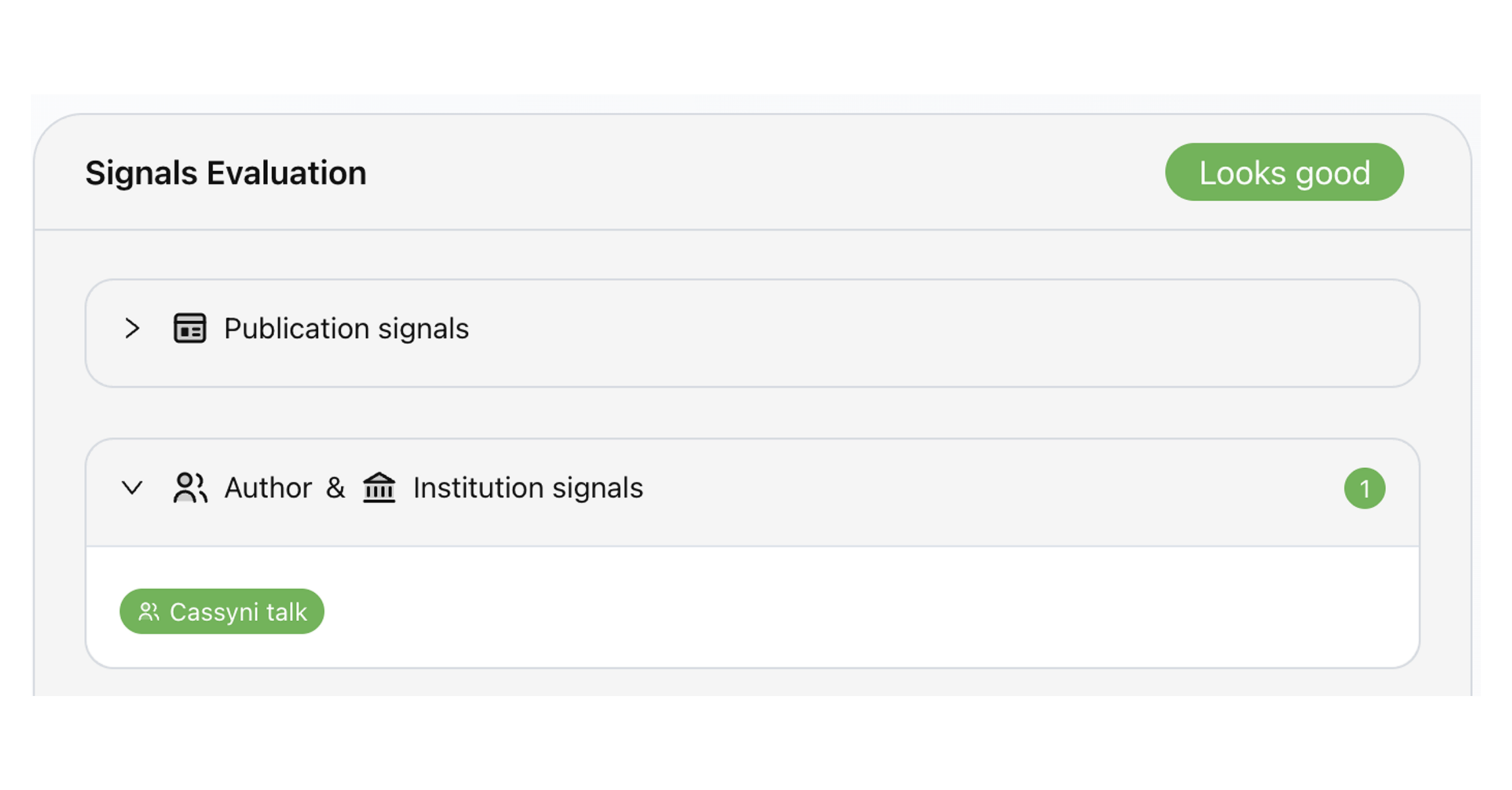
So far, our signals have focussed on research integrity — spotting potential issues in publications and manuscripts such as hallucinated references, authors with a history of misconduct or nonsensical content. This information has helped publishers to reject and retract articles. But a lack of problematic signals doesn’t necessarily make an article trustworthy. Publishers and researchers…
-
European Respiratory Society Partners with Signals to Strengthen Research Integrity Across Its Journals
The European Respiratory Society (ERS) is partnering with Signals to strengthen research integrity across its journal portfolio. ERS staff were particularly concerned about an increase in hallucinated references, some of which had not been caught until the post-acceptance stage. Through the pilot, Signals was able to identify several cases of fake references, and now all…
-
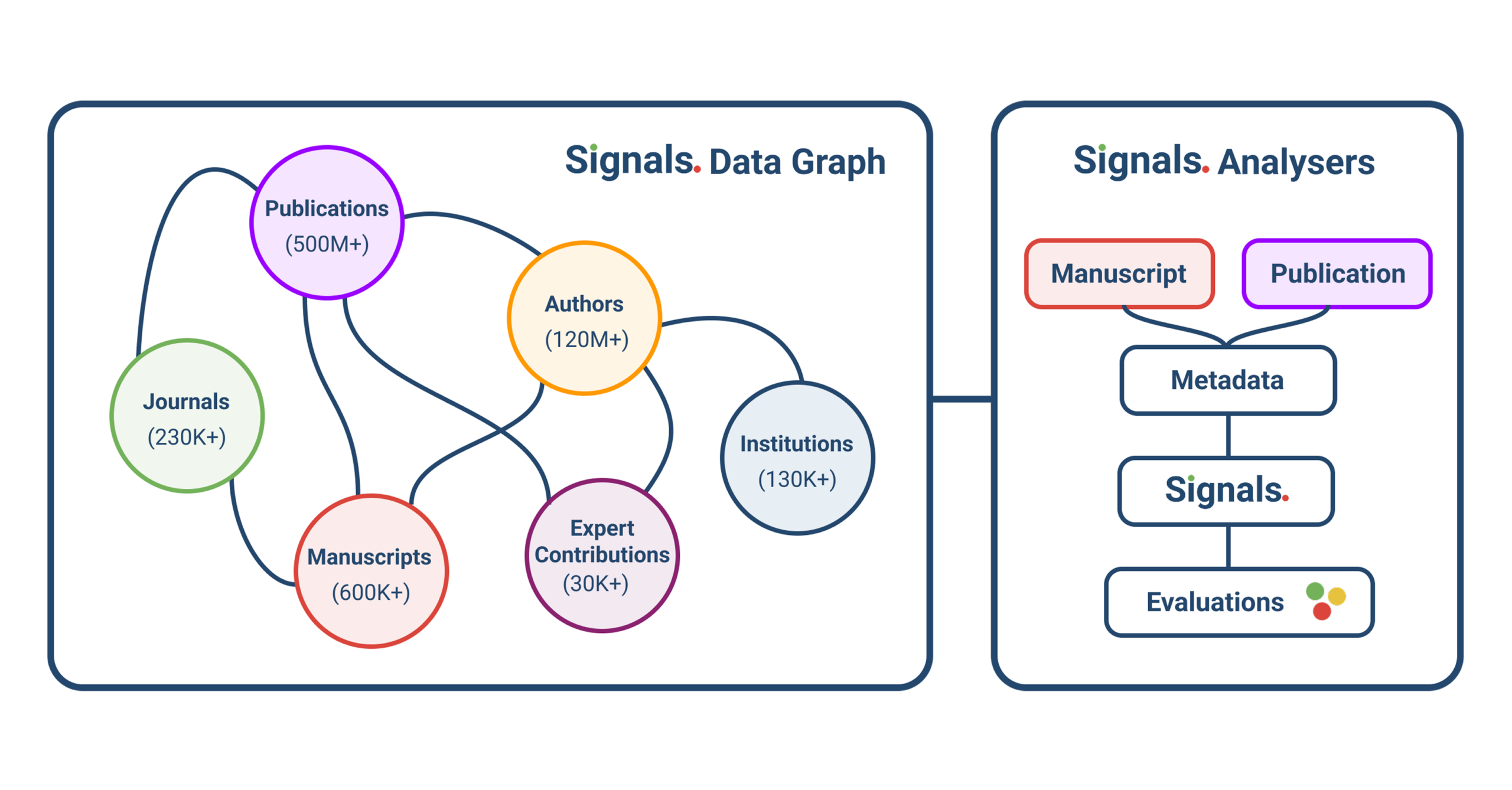
Signals Data Graph: from data source to platform
Sometimes the biggest changes happen behind the scenes. For Signals, that means a major upgrade to the underlying engine of our products — the Signals Data Graph (SDG). For publishers this means a significant step forward in both the accuracy and contextual understanding of our manuscript checks as part of editorial workflows. It also enables…
-
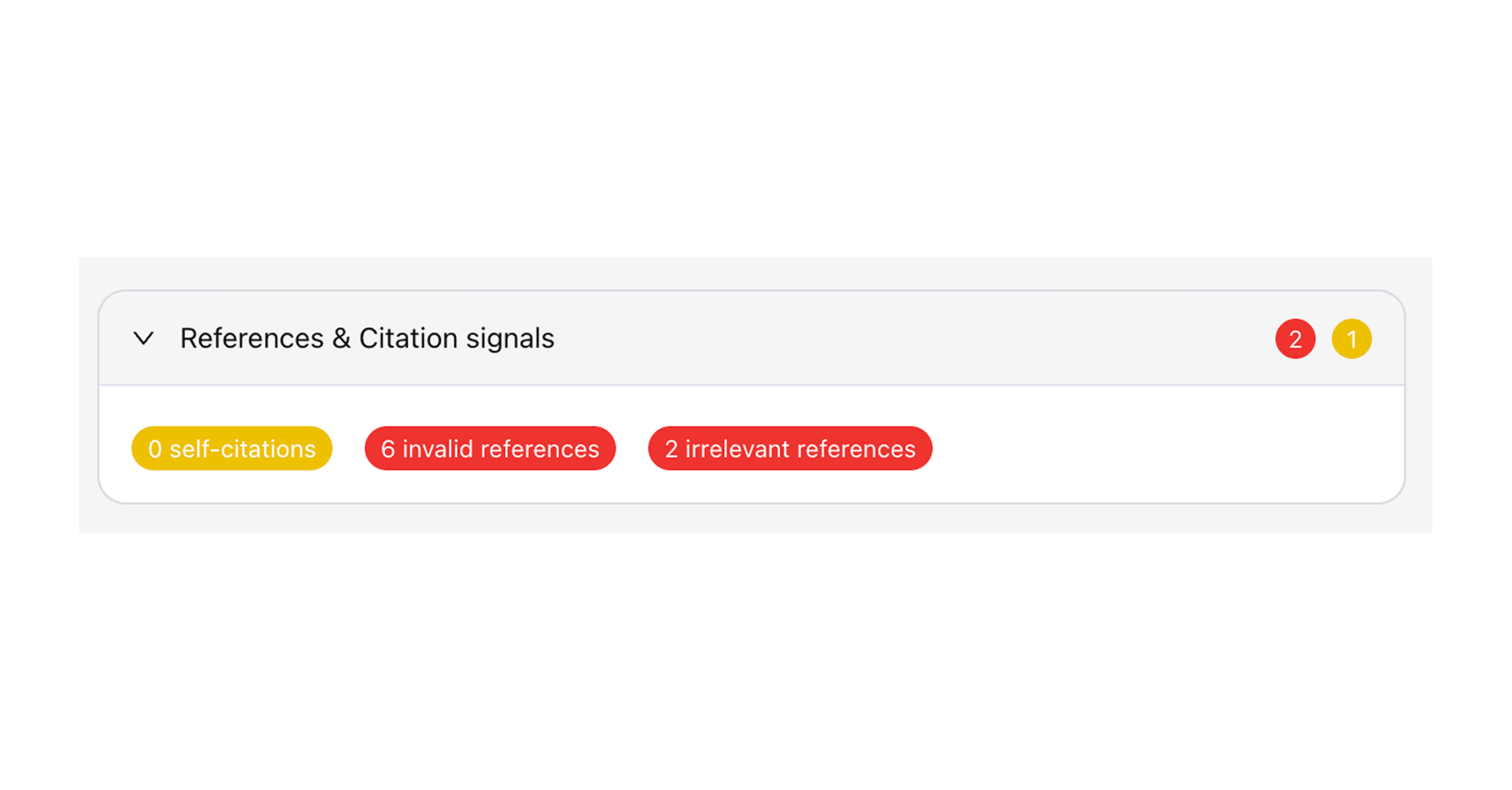
New in Signals: assess the relevance of references in manuscript submissions
Signals can now assess whether the references in a manuscript are actually relevant to the claims they’re attached to. It’s the next evolution of our reference checks, and a major step forward in helping editorial teams quickly evaluate manuscript quality. Earlier this year, we launched the invalid references signal to catch hallucinated references, invalid DOIs,…
-
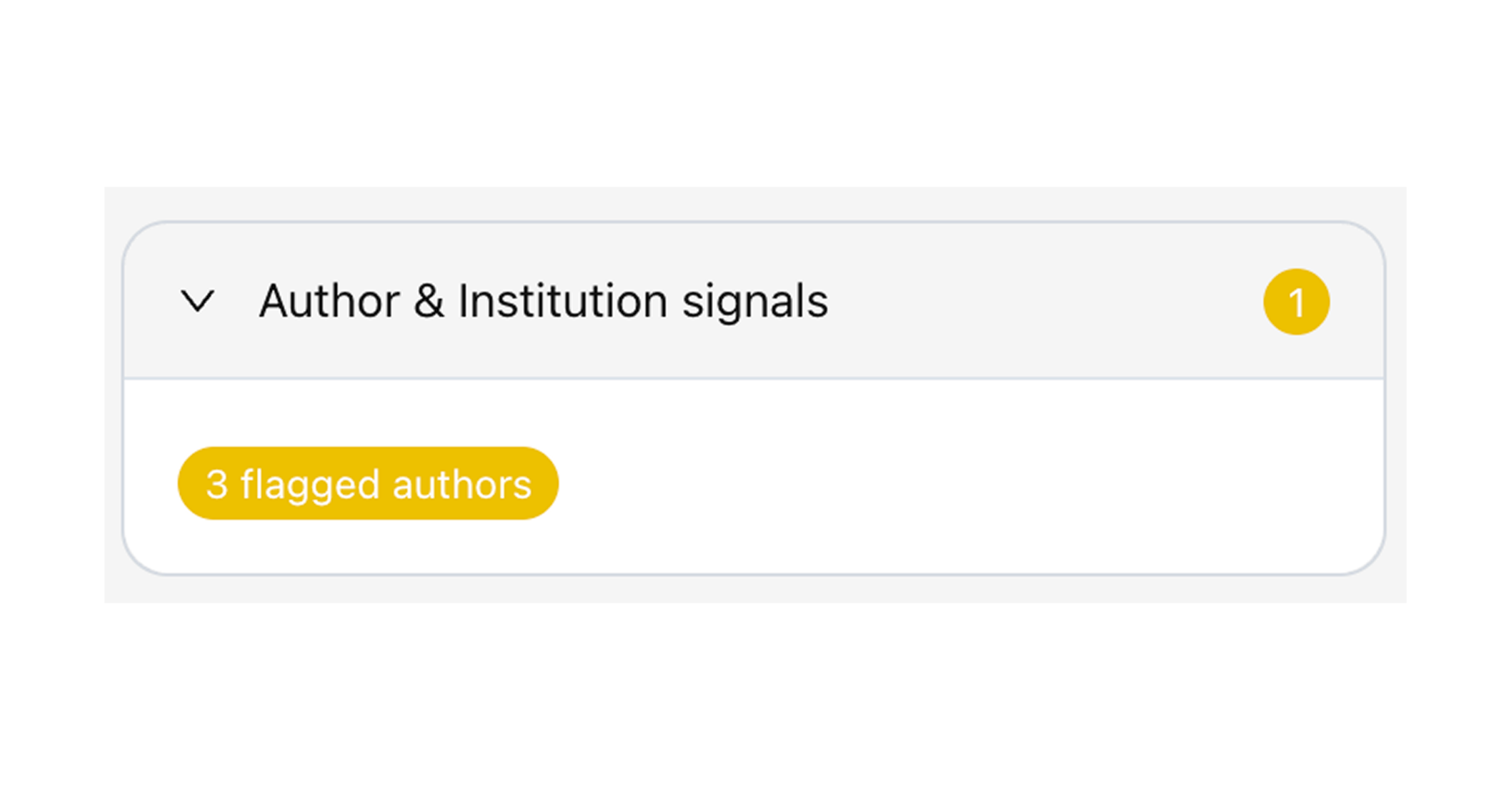
New in Signals: enhanced author publication history checks
With an increasing number of submissions, editorial teams regularly evaluate manuscripts from researchers they don’t know. Checking an author’s publication history can be important for establishing trust, but doing it thoroughly is hugely time-consuming — information is spread across multiple sources, and even then it’s difficult to disambiguate authors with similar names. Automated tools exist,…
-
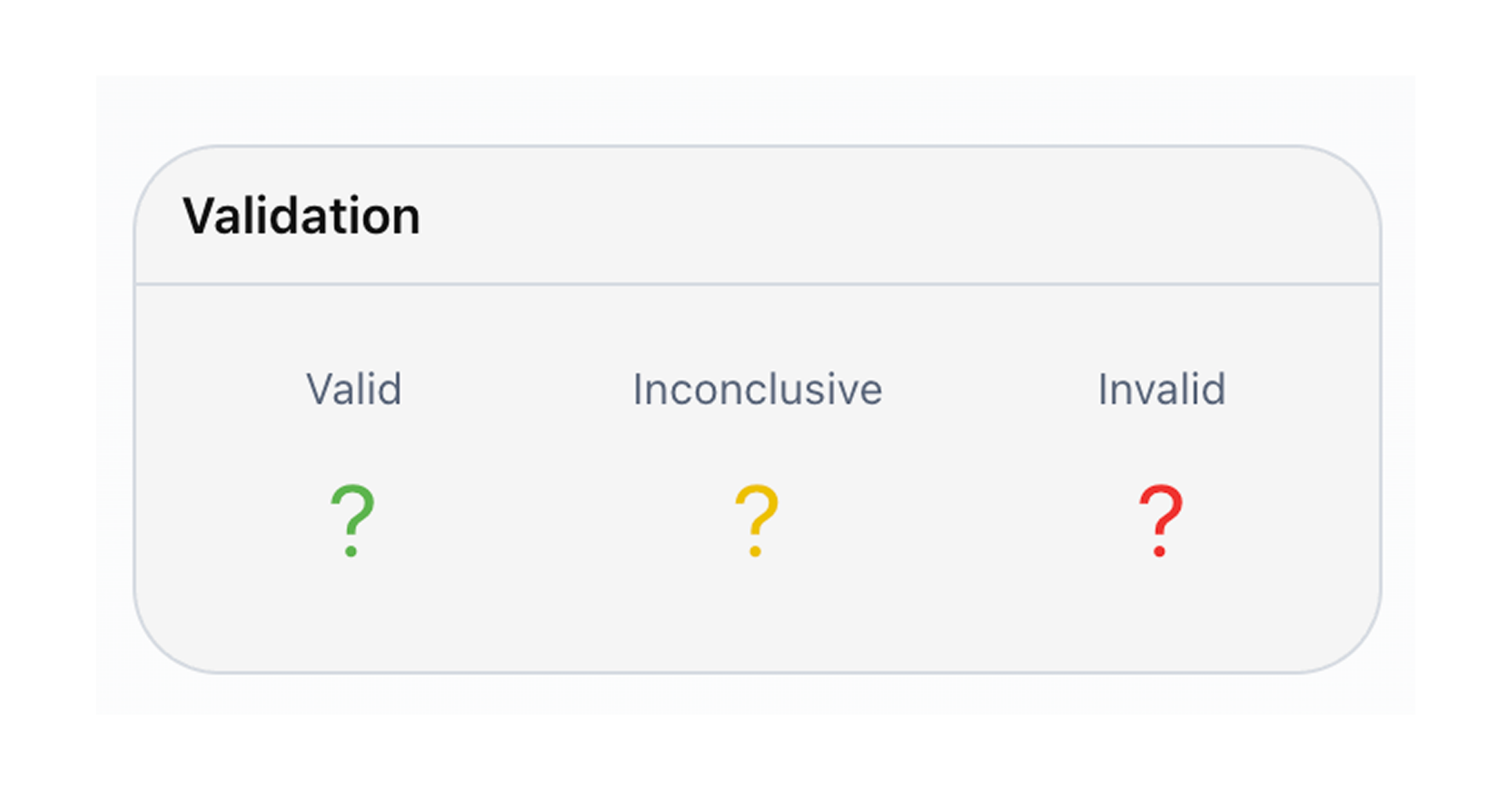
Are Frontier Models Still HalluCitating?
Hallucinated references (or HalluCitations) have become a serious anxiety for editors, who are increasingly asking their publishers for products like Signals to help them identify these muddled and made-up references. Some publishers are looking further ahead and asking me, how long will this actually be a problem? Is it even a problem today? Surely the…
-

New from Signals: catch manuscript content issues instantly with Sleuth AI signals
With a growing number of manuscript submissions, publishers need faster ways to triage what should be sent for editorial assessment and what risks wasting valuable editor time. Signals now goes even deeper into manuscript analysis, automatically spotting issues in the manuscript content and helping publisher teams make better decisions quickly. Our AI research integrity assistant,…
-
Signals raises $1.1m in Seed funding round with investors ACS and Enago
We’re excited to announce that we have raised $1.1m in our Seed funding round backed by minority investments from strategic investors ACS Publications, a division of the American Chemical Society (ACS), and Enago, along with the Scholarly Angels and other leading angel investors. This investment is more than financial. It reflects a shared vision to…
-
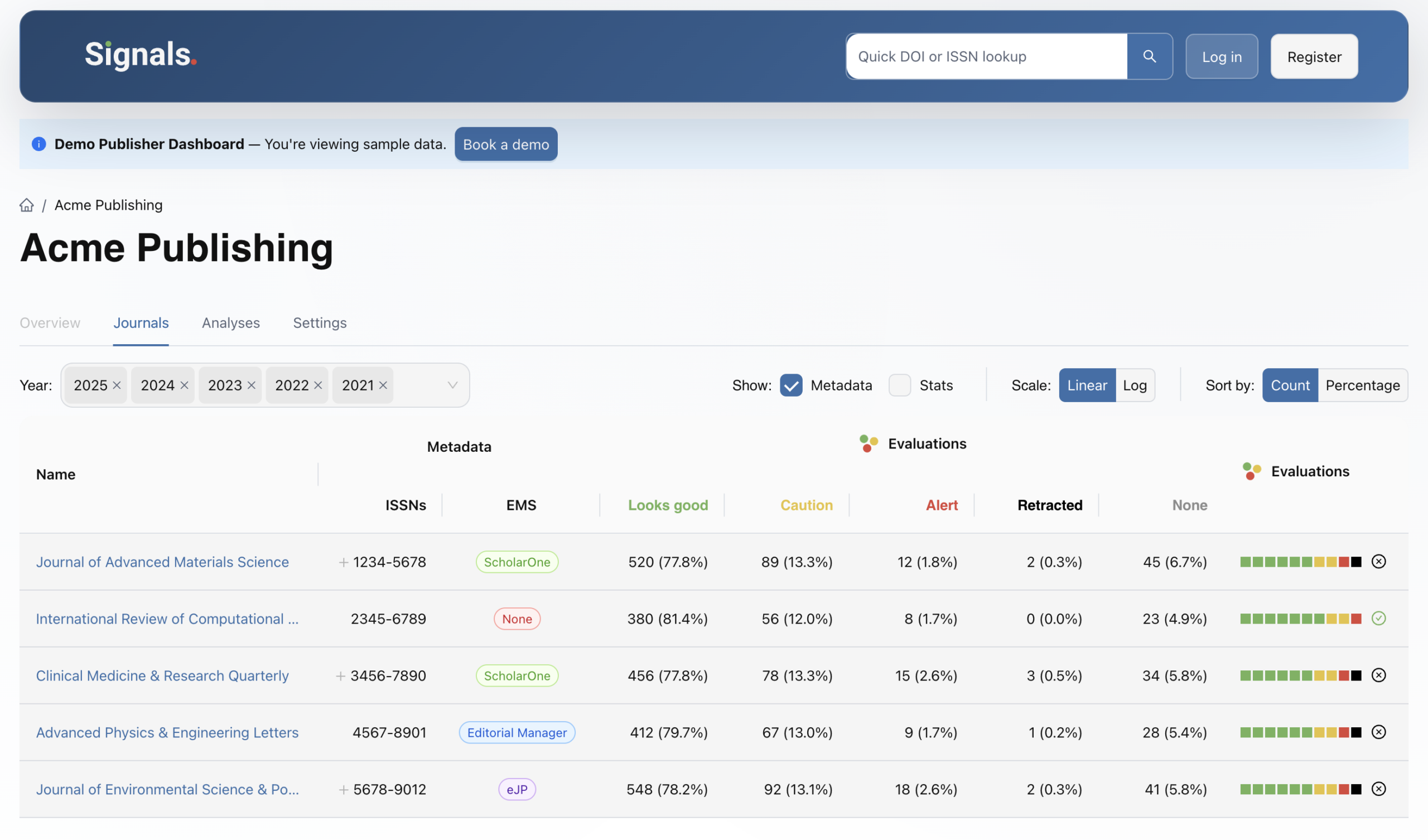
New in Signals: detect invalid references, monitor research integrity trends, and more
It’s a new year, and Signals has a new look. Check out the app to see our sleek new design and sample Publisher Dashboard. Alongside many UI improvements, we have been busy developing many new capabilities for Signals Manuscript Checks and the Publisher Dashboard. The updates will help our Publisher partners improve their screening of…